
Condos and Resort Properties: Project Eligibility
Why a lender reviews the development as well as you on a resort condominium, and how a rental program can affect second home financing.
Written by Bryan Piccolomini, NMLS #228509, a mortgage loan originator with Residential Mortgage, LLC (NMLS #167729), a wholly owned subsidiary of Northrim Bank. Loans are originated through Residential Mortgage, LLC.
Two reviews, not one
On a detached house the lender is largely assessing you and the property. On a condominium there is a second review running alongside: the project itself. That review looks at how the development is organized and operated, and its outcome is outside your control. A well-qualified buyer can be turned down on a specific unit for reasons that have nothing to do with the buyer.
This is not a reason to avoid condominiums. It is a reason to ask early, because the answer changes what you should be looking at.
The rental program question
This is where resort condominiums and second home financing collide most often.
Fannie Mae's Selling Guide requires that a second home must not be rental property or a timeshare arrangement
and cannot be subject to any agreements that give a management firm control over the occupancy
. Read that second clause carefully, because it is not about whether the unit is ever rented. It is about who controls the calendar.
Many resort developments run a rental program, and some enroll units by default. Where that arrangement hands occupancy decisions to a management company, it collides directly with the second home requirement, no matter how you personally intend to use the place. The question to ask the listing agent or the association, before an offer, is whether units are enrolled in a rental or management program and whether participation is optional.
Separately, and this trips people up in the other direction: occasional rental income does not automatically disqualify a second home. The Selling Guide says a loan remains eligible for delivery as a second home where the lender identifies rental income, as long as the income is not used for qualifying purposes
and all other second home requirements are met. Control is the test, not the existence of income. The classification guide works through the distinction, and the occupancy guide covers what the commitment means over time.
Source: Fannie Mae Selling Guide B2-1.1-01, Occupancy Types.
Year-round occupancy, literally
The Selling Guide also requires that a second home must be suitable for year-round occupancy
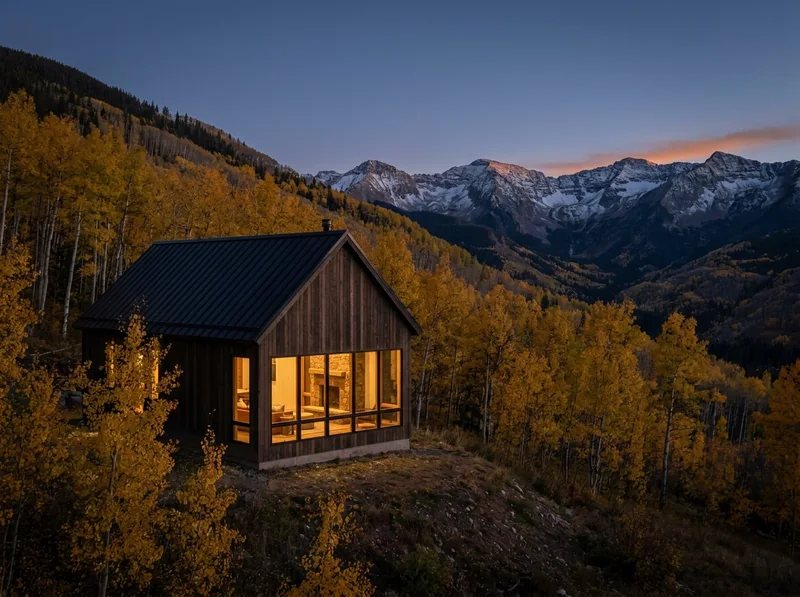
. In resort markets that is a live test rather than a formality. Properties built for a season, without systems intended to function through winter, or without reliable year-round access, can fail it. A cabin that is genuinely closed up for months is worth asking about specifically.
The same section restricts a second home to one-unit dwellings
, which is worth knowing if you are looking at anything with a second living space attached.
What else the project review looks at
The specifics vary and the determination belongs to the lender rather than to a guide, but the categories that come up repeatedly on resort properties are worth anticipating:
- How the development is organized and operated, including whether it functions as a residential association or as something closer to a hotel operation.
- The financial condition of the association, including reserves and budget.
- Insurance carried at the project level, which sits alongside your own policy.
- Concentration of ownership, meaning how much of the development is held by a single party.
- Litigation involving the association.
- Commercial space within the development.
None of these are things you can fix. All of them are things you can find out early, and several are questions a listing agent can answer in a phone call.
Ask these before you make an offer
- Is the unit enrolled in a rental or management program, and is participation optional?
- Is the property usable year round, including access?
- Has the association's project information been reviewed by a lender recently?
- Are there known issues with the association's finances, insurance or litigation?
- What does the association's insurance cover, and what will I need to carry myself?
Bring the answers to a first conversation. On a resort condominium the property raises more questions than the borrower does, and settling them early is the difference between a smooth file and a wasted contract. The vacation home guide covers the wider set of property-side issues, including why appraisals take longer in thin markets.
Common questions
Can I finance a resort condo as a second home?
Often yes, but the lender reviews the development as well as you, and the project's own characteristics can determine what financing is available. The arrangement that most often causes a problem is a rental or management program that controls occupancy of the units.
Does a rental program stop a condo being a second home?
Fannie Mae's Selling Guide says a second home cannot be subject to any agreements that give a management firm control over the occupancy. Where a development places units under that kind of arrangement, it conflicts with the second home requirement regardless of how you personally plan to use the property.
Can I rent out my resort condo sometimes?
Fannie Mae's Selling Guide says a loan remains eligible for delivery as a second home where the lender identifies rental income, as long as that income is not used for qualifying purposes and all other second home requirements are met. The test is control over occupancy rather than whether income exists.
What should I ask before making an offer on a resort condo?
Whether units are enrolled in a rental or management program and whether that is optional, whether the property is usable year round including access, and whether the association has known issues with its finances, insurance or litigation. A listing agent can usually answer several of these in a phone call.
Related guides


Ask about the building before the offer
Send Bryan the listing. On a resort condominium the project questions are the ones worth settling first.