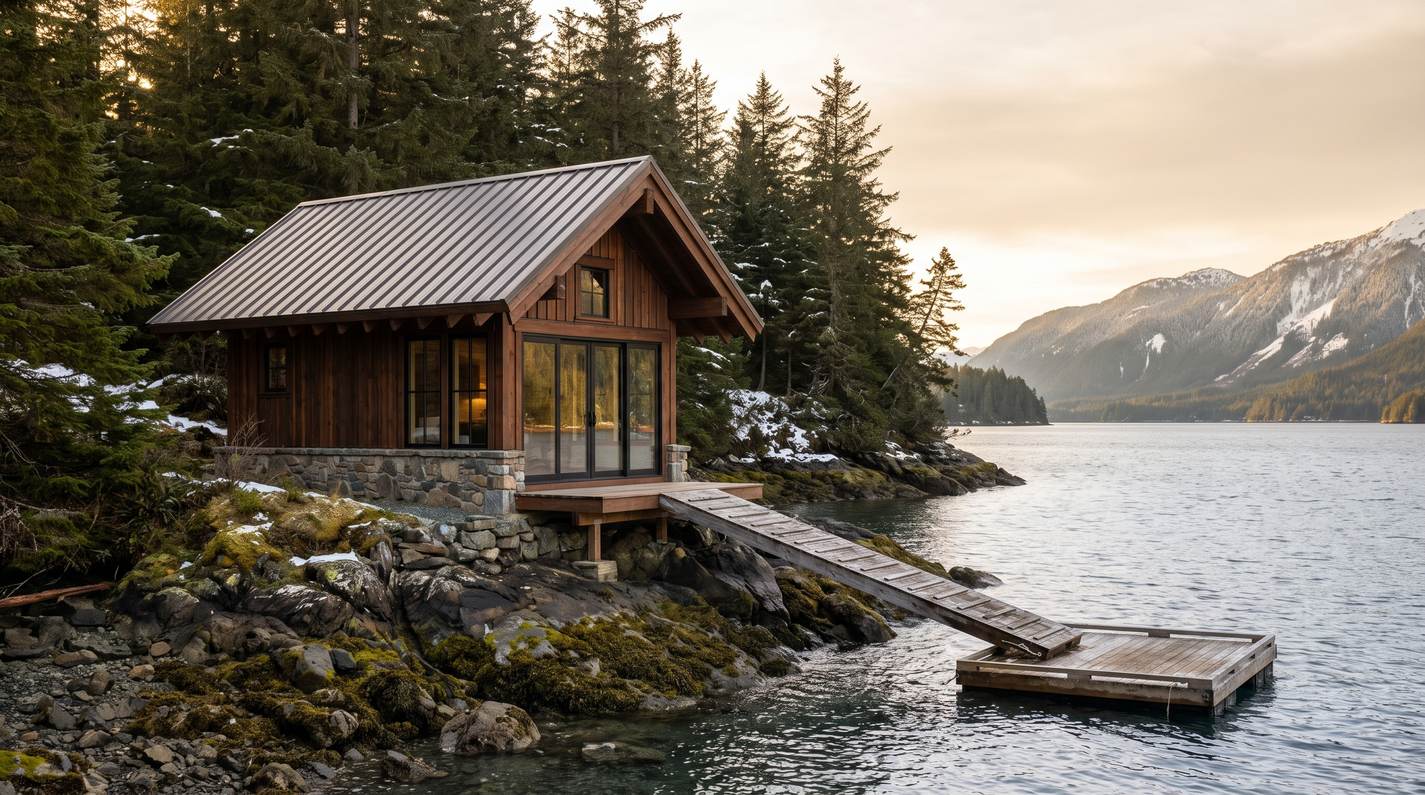
Second home loans in Alaska
Licensed here, and clear about the two things that decide an Alaska file before anything else does: how you reach the property, and whether it can be lived in year round.
suitable for year-round occupancyand a great many Alaska recreational properties are not: seasonal water systems, no maintained winter road, or no road at all. Establishing access and winter habitability before you make an offer matters more here than anywhere else on this list.
Where second home buying concentrates in Alaska
Alaska second home demand is concentrated in a handful of corridors, most of them within reach of Anchorage, and each one raises a different question on the loan file.
- The Kenai Peninsula, from Soldotna and Sterling down through Kasilof and Ninilchik to Homer and out to Seward. This is the classic Alaska second home country: river and inlet frontage, fishing cabins, and a wide spread of build quality inside a single few-mile stretch.
- Girdwood and the Alyeska corridor, the state's ski resort market, with a condominium and townhome stock that behaves like a resort market anywhere else, rental programs included.
- The Matanuska-Susitna Valley, around Big Lake, Houston, Willow and Talkeetna, where lakefront cabins are close enough to Anchorage to be used most weekends of the year.
- Juneau and the northern Panhandle, where the housing stock is urban by Alaska standards but boat and float plane access properties sit only a short distance outside town.
- Kodiak and the outer coast, along with the remoter parts of Prince of Wales Island, where a property may be reachable only by water or air and the whole appraisal question changes.
- The Interior around Fairbanks, including the Chena and Tanana river cabins, where the winter habitability question is at its most literal.
Those are descriptions of where the market is, not a claim about prices or returns. What matters for your file is which of those property types you are buying, and how it is served.
Source: U.S. Census Bureau, American Community Survey 5-year estimates, 2023, tables B25004 and B25001.
What usually decides a Alaska file
Year-round occupancy is not a formality here
Fannie Mae's Selling Guide requires a second home to be suitable for year-round occupancy
. In most states that sentence never comes up. In Alaska it is the first question, because a large share of the recreational stock has a summer-only water system, is winterized and shut down in September, or sits on a road nobody plows. A cabin that cannot be occupied in February is a harder financing conversation than a house of the same value in the same borough.
Ask, before you make an offer: is there a year-round water supply, is the heating system permanent, and does someone maintain the road in winter.
Source: Fannie Mae Selling Guide B2-1.1-01, Occupancy Types.
Access, and what it does to the appraisal
Legal and physical access is a routine underwriting item everywhere, and in Alaska it is a live one. Properties reached by boat, by float plane, or by a seasonal trail are not automatically ineligible, but they narrow the lender list quickly and they make the appraisal harder, because the comparable sales an appraiser needs may be few and far apart. The practical consequence is a longer timeline, so start earlier than you would in a serviced subdivision.
The lender behind the loan has an Alaska connection
Worth knowing when you are deciding who to call about an Alaska property: Residential Mortgage, LLC states on its own site that it is a wholly owned subsidiary of Northrim Bank, and that it was established in 1998 and now lends in many states. That is an unusual thing for a buyer in Homer or Talkeetna to find at the other end of an out-of-state phone number.
Source: Residential Mortgage, LLC, published loan officer biography.
The rental question in Girdwood and on the Kenai
Both markets have properties that come with an established summer rental history, and sellers often present that history as a feature. It is worth being precise about your own plans, because a second home cannot be subject to any agreements that give a management firm control over the occupancy
, and it must be under the borrower's exclusive control. If the plan is to run the place as a business, that is an investment property purchase, which the Eligibility Matrix treats differently: 85% maximum loan-to-value on a one-unit investment property against 90% on a one-unit second home, and six months of reserves under Desktop Underwriter against two.
Source: Fannie Mae Selling Guide, Eligibility.
Which guides matter most here
For an Alaska purchase, three are worth reading before the first call.
Licensing in Alaska
Residential Mortgage, LLC is authorized to close loans in Alaska, one of the 27 states on the company's published authorization list. Bryan Piccolomini holds NMLS #228509 and Residential Mortgage, LLC holds NMLS #167729. Both can be checked independently on NMLS Consumer Access. Fuller detail is on the licensing page.
Common questions
Can Bryan lend on a second home in Alaska?
Yes. Residential Mortgage, LLC is authorized to close loans in Alaska, one of the 27 states on the company's published list, and Bryan Piccolomini holds NMLS #228509.
Can I finance a cabin with no road access?
It is harder rather than automatically impossible, and it depends on the lender and the program. Two things drive it: whether there is legal access to the parcel, and whether an appraiser can find comparable sales to support the value. Both are worth settling before an offer rather than after.
Does a summer-only cabin work as a second home?
Fannie Mae requires a second home to be suitable for year-round occupancy, so a property that is winterized and closed for half the year raises a real question. It is the first thing to check on an Alaska file, and the answer usually turns on the water system, the heat source and winter road maintenance.
The seller says it rents well in summer. Does that help my loan?
Not on a second home. Rental income cannot be used for qualifying on a second home purchase, and an agreement that hands a management firm control over occupancy conflicts with the second home definition outright. Tell Bryan the actual plan early, because it decides which loan you are applying for.
More states: all 27. Run the arithmetic first on the calculators page.
Send Bryan the listing
On an Alaska property, access and winter habitability are the two answers worth having before you write an offer.