
Second home loans in California
Licensed here, and familiar with what actually slows these purchases down: resort rental programs, condominium project review, and insurance.
Where second home buying concentrates in California
California second home demand is not spread evenly. It clusters in a handful of well-defined regions, and each one raises a different question on the loan file.
- Lake Tahoe and the northern Sierra, across Placer and El Dorado counties, plus Truckee. Mountain construction, seasonal access roads and a dense stock of condominiums, many in developments that operate rental programs.
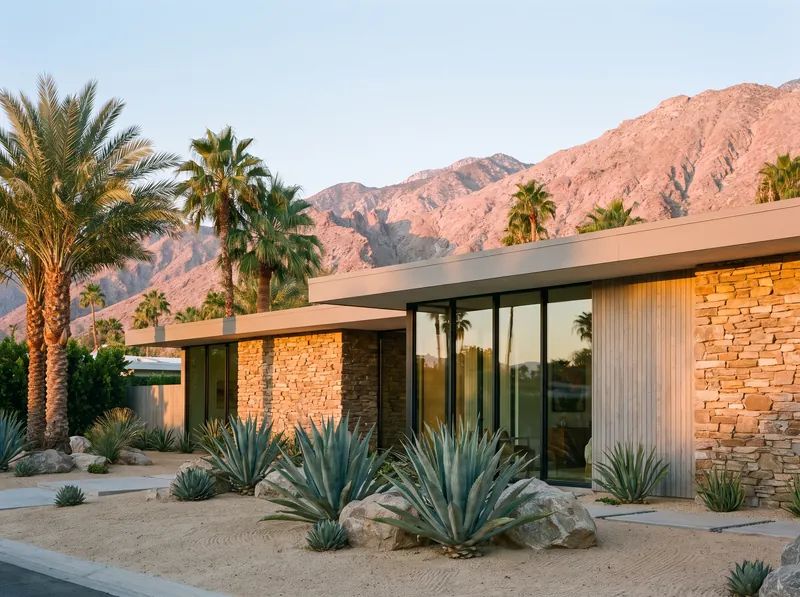
- Palm Springs and the Coachella Valley, including Rancho Mirage, La Quinta and Indian Wells. Heavy condominium and planned-development ownership, and a strong seasonal rental culture that makes the occupancy question a real one.
- Napa and Sonoma, where second homes sit alongside agricultural parcels and the property type can be less standard than it first appears.
- The Monterey Peninsula, including Carmel and Pebble Beach, where values commonly push a conforming loan into jumbo territory.
- Big Bear and Lake Arrowhead in the San Bernardino Mountains, the closest mountain second home market to the Los Angeles basin, where wildfire insurance availability is a live issue.
- Mammoth Lakes in Mono County, almost entirely a second home and resort condominium market.
- The San Diego and Orange County coast, and Santa Barbara, where a second home is often a walkable coastal condominium rather than a cabin.
Those are descriptions of where the market is, not a claim about prices or returns. What matters for your file is which of those property types you are buying.
Source: U.S. Census Bureau, American Community Survey 5-year estimates, 2023, tables B25004 and B25001.
What usually decides a California file
Occupancy, and the rental program problem
California resort markets have an unusually high concentration of developments that place units into a rental program. Fannie Mae's Selling Guide says a second home cannot be subject to any agreements that give a management firm control over the occupancy
, and it must be under the borrower's exclusive control
. That is the single most common reason a California resort condominium does not work as a second home. Ask whether participation is optional before you make an offer.
Separately, many California resort towns regulate short-term rentals at the local level. Those rules do not decide your loan classification, but they shape what you can realistically do with the property, and it is better to know both answers at once.
Source: Fannie Mae Selling Guide B2-1.1-01, Occupancy Types.
Insurance in wildfire-exposed areas
In the Sierra foothills, the San Bernardino Mountains and much of the wildland interface, obtaining homeowner's insurance has become a genuine constraint rather than a formality, and coverage has to be in place at closing. This is the item to start earliest on. In several California markets it now drives the timeline more than the mortgage does.
Loan size
Conforming loan limits are set annually by the Federal Housing Finance Agency and vary by county, with several California counties designated high-cost. Whether a purchase is conforming or jumbo changes the underwriting path, so it is worth establishing early against the current year's published table.
From Bryan’s desk. California is the state where Bryan’s buyers purchase second homes most often, and insurance is the cost that surprises them. In wildfire country such as Idyllwild he has seen premiums around $6,000 a year on a home near $550,000, and around Lake Tahoe wildfire risk can make coverage hard to get at all.
Price insurance as soon as you have a specific property in mind.
Bryan Piccolomini, NMLS #228509, in an interview for this site, October 2026. Insurer of last resort: California Department of Insurance, FAIR Plan.
Which guides matter most here
For a California purchase, three are worth reading before the first call.
Licensing in California
Residential Mortgage, LLC is licensed by the Department of Financial Protection and Innovation under the California Residential Mortgage Lending Act, License No. 41DBO-183108. Bryan Piccolomini holds NMLS #228509 and Residential Mortgage, LLC holds NMLS #167729. Both can be checked independently on NMLS Consumer Access. Fuller detail is on the licensing page.
Common questions
Can Bryan lend on a second home in California?
Yes. Residential Mortgage, LLC is licensed by the California Department of Financial Protection and Innovation under the California Residential Mortgage Lending Act, License No. 41DBO-183108, and California is one of the 27 states on the company's published authorization list.
Does a Tahoe or Palm Springs property count as a second home?
It depends on how you will use it, not where it is. Fannie Mae requires a second home to be occupied by the borrower for some portion of the year, suitable for year-round occupancy, and under the borrower's exclusive control, and it cannot be subject to any agreement giving a management firm control over the occupancy. Many California resort developments run rental programs, so that is worth checking before an offer.
Is a California second home likely to be a jumbo loan?
It can be. Conforming loan limits are set annually by the Federal Housing Finance Agency and vary by county, and several California counties carry higher limits than the national baseline. The current year's published table is the only figure worth acting on.
What should I sort out earliest on a California purchase?
Insurance, particularly in wildfire-exposed foothill and mountain areas, and the project documentation if you are buying a condominium. In several California markets those two items drive the timeline more than the loan does.
More states: all 27. Run the arithmetic first on the calculators page.
Send Bryan the listing
On a California resort property the project and insurance questions are the ones worth settling first.