Second home loans in Indiana
A lake-cottage state with one detail buyers rarely price in. The property tax cap that applies to your own home does not apply to the second one.
Where second home buying concentrates in Indiana
Indiana's second home demand sits in three places, and most of it is on water.
- Kosciusko County, around Lake Wawasee, Syracuse Lake and Lake Tippecanoe, the state's best known lake second home market and a weekend drive from Indianapolis, Fort Wayne and Chicago.
- Steuben and LaGrange counties, the chain of smaller lakes around Angola, Lake James and Clear Lake in the far northeast corner, drawing heavily from Fort Wayne and southern Michigan.
- The Lake Michigan shore, meaning Michigan City, Long Beach, Beverly Shores and the towns around the Indiana Dunes, largely owned by Chicago-area buyers an hour away.
- Brown County and Lake Monroe, around Nashville and Bloomington, a wooded cabin market rather than a beach one, with Indiana University football weekends adding their own demand.
- Lake Freeman and Lake Shafer, near Monticello in the northwest, a pair of reservoir markets closer to Lafayette and Indianapolis.
- Patoka Lake and the southern hills, a quieter and more rural market drawing from Louisville and Evansville as much as from inside the state.
Those are descriptions of where the market is, not a claim about prices or returns. The lakes, the dunes shore and the hill country each raise a slightly different question.
Source: U.S. Census Bureau, American Community Survey 5-year estimates, 2023, tables B25004 and B25001.

What usually decides a Indiana file
The property tax cap is different on a second home
Indiana limits a property's tax bill with a set of caps, applied by the county auditor as a credit. The Department of Local Government Finance lists them as 1% of gross assessed value for homestead property and 2% for other residential property. A homestead is a principal place of residence, so a second home sits under the 2% cap rather than the 1% one, and the homestead deduction does not apply to it either.
Why a lender cares: the tax figure in the debt-to-income calculation is the one this property will actually carry in your hands, not the seller's bill. A seller who lived in the cottage full time may have been paying under the homestead cap. Ask the county for an estimate on a non-homestead basis before you rely on the listing's tax figure.
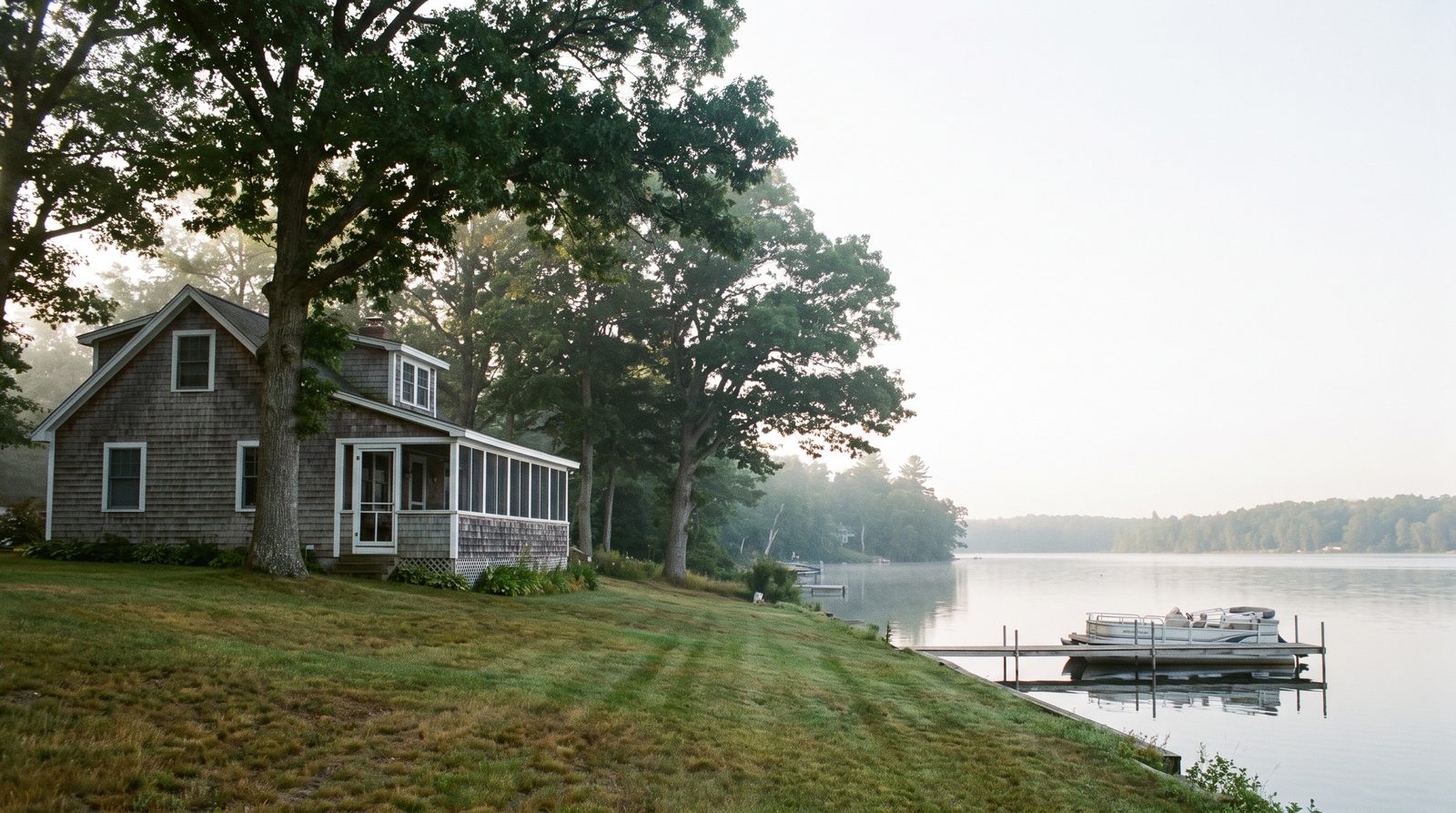
On the lakes, the pier needs to be legal
Indiana's Lakes Preservation Act makes the state's public freshwater lakes a public right and requires DNR authorization for work at or lakeward of the shoreline. A seasonal pier that meets a defined set of conditions can be covered by a general license rather than an individual permit, but permanent structures, seawalls and anything unusually large are a different matter. Whether the pier, boat lift or seawall in the listing photographs is authorized is a question for the inspection period, not a detail for after closing.
Source: Indiana DNR Division of Water, Lakes Preservation Act.
Older cottages and year-round use
A second home has to be suitable for year-round occupancy. Most northern Indiana lake houses are, but the older cottage stock around the smaller lakes includes seasonal construction, summer-only water lines and narrow lots on shared or aging septic. Those are appraisal and inspection items, and on the smaller lakes the pool of comparable sales can be thin. Ordering the appraisal early is the practical fix.
The rental question, around Bloomington and on the dunes shore
Brown County cabins and the houses near the Indiana Dunes are often marketed with a short-term rental history. Fannie Mae's Selling Guide says a second home cannot be subject to any agreements that give a management firm control over the occupancy
and that the borrower must keep exclusive control of the property.
Source: Fannie Mae Selling Guide B2-1.1-01, Occupancy Types.
If the property will stay in a management program after closing, it is an investment property purchase, which is financeable on different terms. The Fannie Mae Eligibility Matrix, August 2026 edition, lists 90% as the maximum loan-to-value on a one-unit second home purchase against 85% on a one-unit investment property.
Source: Fannie Mae Selling Guide, Eligibility.
Which guides matter most here
For an Indiana purchase, these three carry most of the weight.
Licensing in Indiana
Residential Mortgage, LLC is authorized to close loans in Indiana, one of the 27 states on the company's published authorization list. Bryan Piccolomini holds NMLS #228509 and Residential Mortgage, LLC holds NMLS #167729. Both can be checked independently on NMLS Consumer Access. Fuller detail is on the licensing page.
Common questions
Can Bryan lend on a second home in Indiana?
Yes. Residential Mortgage, LLC is authorized to close loans in Indiana, one of the 27 states on the company's authorization list, and Bryan Piccolomini holds NMLS #228509.
Why would my tax bill be higher than the seller's?
Because the cap that applies may be different. Indiana caps a homestead's property tax at 1% of its gross assessed value and other residential property at 2%. If the seller lived in the house as a principal residence and you will not, the bill in your hands can be higher, and the lender uses that figure.
Do I need a permit for the pier on a lake house?
It depends on the structure. On a public freshwater lake, Indiana requires DNR authorization for work at or lakeward of the shoreline, and a removable seasonal pier that meets the state's conditions can be covered by a general license. Permanent structures and seawalls are worth confirming during the inspection period.
Can I finance an older summer cottage?
Often, if it works year round. Fannie Mae requires a second home to be suitable for year-round occupancy, so the water supply, the heat source and the septic are the things to establish before an offer.
Can I rent the cabin when we are not using it?
Occasional rental is not the issue. What matters is whether the property is subject to an agreement that gives a management firm control over the occupancy. If it is, the purchase is an investment property, which is financeable on different terms.
More states: all 27. Run the arithmetic first on the calculators page.
Get the real tax figure first
On an Indiana second home, the non-homestead tax line is the number that moves the file.