Second home loans in Wisconsin
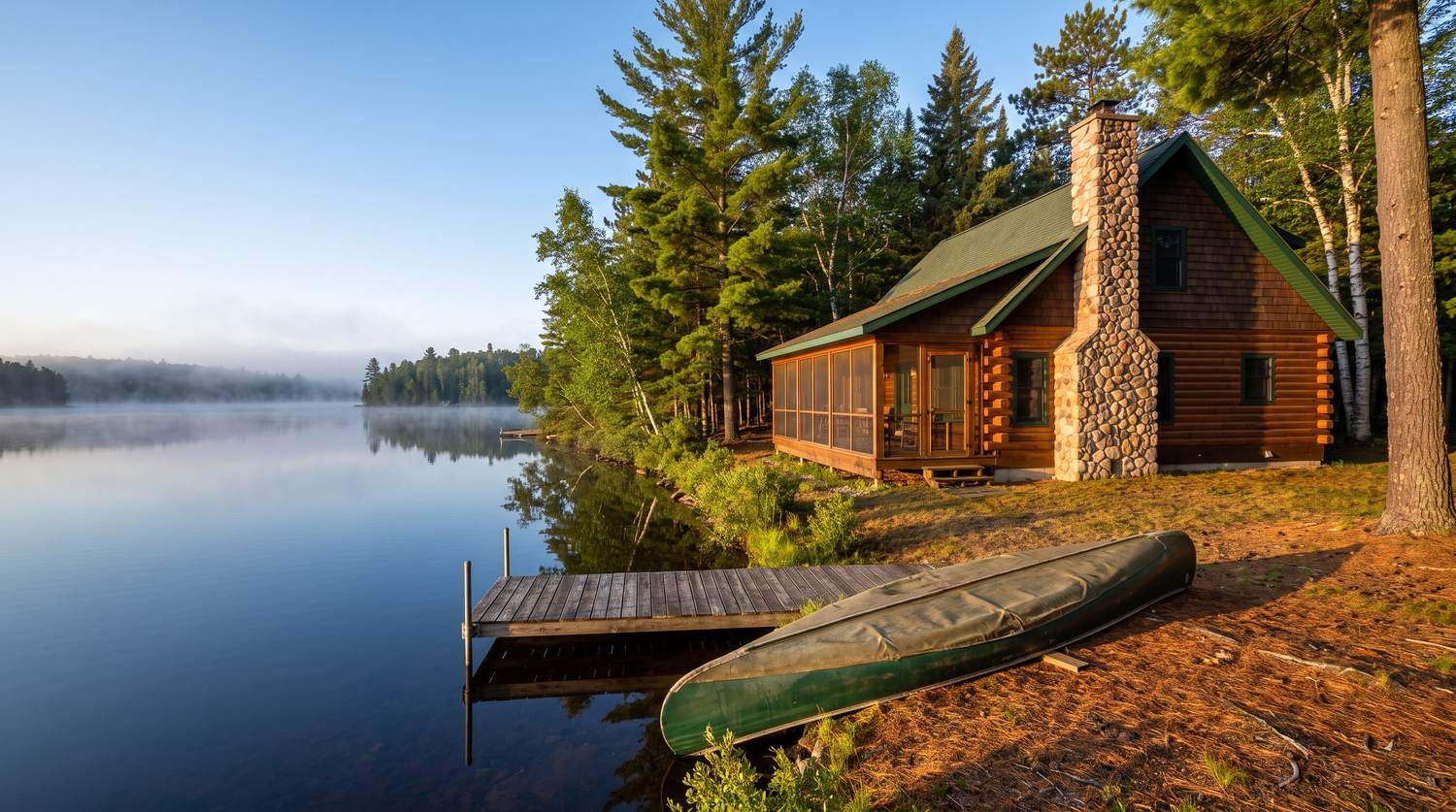
The classic American lake cabin state, and the one where the difference between a three-season cottage and a year-round house decides whether a second home loan fits at all.
Where second home buying concentrates in Wisconsin
Wisconsin's second home demand runs from the Illinois line to Lake Superior, with the largest concentrations on the peninsula and in the northern lake country.
- Door County, from Egg Harbor and Fish Creek to Ephraim, Sister Bay and Washington Island, the state's best known second home peninsula and a market with both waterfront and in-village stock.
- The Northwoods lake districts, around Minocqua, Eagle River, Boulder Junction, St. Germain and Rhinelander, where chains of lakes define the market and cabins range from rustic to substantial.
- Hayward and the Chequamegon country in the northwest, drawing heavily from the Twin Cities as well as from Wisconsin.
- Lake Geneva and Walworth County, the closest lake market to Chicago and the most developed, with an older tradition of second home ownership than anywhere else in the state.
- Wisconsin Dells and the Baraboo hills, plus Green Lake and the Fox valley lakes, weekend markets for Madison, Milwaukee and the Chicago suburbs.
- Bayfield and the Apostle Islands on Lake Superior, a smaller and more remote market with genuinely severe winters.
Those are descriptions of where the market is, not a claim about prices or returns. Whether the cabin is a four-season building is the practical dividing line.
Source: U.S. Census Bureau, American Community Survey 5-year estimates, 2023, tables B25004 and B25001.
What usually decides a Wisconsin file
Three-season cottages and the year-round requirement
Fannie Mae requires a second home to be suitable for year-round occupancy
. A great deal of Wisconsin's older lake stock was built for summer: water lines that are drained in October, a wood stove or space heater rather than a permanent heating system, and in some cases a town road that stops being plowed at the last year-round residence. Establish the water supply, the heat source and winter road maintenance before you make an offer, because those three answers decide whether the property fits a second home loan.
Source: Fannie Mae Selling Guide B2-1.1-01, Occupancy Types.
Older lakefront lots and how they were platted
Wisconsin shoreland lots were frequently platted long before current zoning, and an existing cabin can sit closer to the water or to a lot line than today's rules would allow. That is common and it is usually not an obstacle, but it is worth understanding during due diligence, because it can affect insurance, any plan to rebuild or expand, and how an appraiser describes the property.
Private roads and shared access
Access to lake property often runs across a private road or a shared easement with an informal maintenance arrangement. Lenders are comfortable with this when the documentation exists. Gathering it early is what keeps a Wisconsin closing on schedule.
Rental activity in the resort towns
Door County, the Dells and the Northwoods all have visible short-term rental markets. A second home cannot be subject to any agreements that give a management firm control over the occupancy
and must be under the borrower's exclusive control, and rental income cannot be used for qualifying on a second home. Where renting is the point of the purchase, it is an investment property file with different terms.
Which guides matter most here
For a Wisconsin purchase, these three are the fit.
Licensing in Wisconsin
Residential Mortgage, LLC is authorized to close loans in Wisconsin, one of the 27 states on the company's published authorization list. Bryan Piccolomini holds NMLS #228509 and Residential Mortgage, LLC holds NMLS #167729. Both can be checked independently on NMLS Consumer Access. Fuller detail is on the licensing page.
Common questions
Can Bryan lend on a second home in Wisconsin?
Yes. Residential Mortgage, LLC is authorized to close loans in Wisconsin, one of the 27 states on the company's published list, and Bryan Piccolomini holds NMLS #228509.
Can I finance a three-season cabin?
It raises a genuine question rather than an automatic no. Fannie Mae requires a second home to be suitable for year-round occupancy, and a cabin with drained water lines and no permanent heat sits awkwardly against that. Establish the water, heat and winter access answers before you make an offer.
The cabin sits closer to the water than current zoning allows. Is that a problem?
It is common on older Wisconsin shoreland lots and it is usually manageable. What it can affect is insurance and any plan to rebuild or expand, so it is worth understanding during due diligence rather than after closing.
Is a property on a private road financeable?
Generally yes, given evidence of legal access and a maintenance arrangement. Where the road is not plowed in winter, that feeds back into the year-round occupancy question.
More states: all 27. Run the arithmetic first on the calculators page.
Check the heat and the water first
On a Wisconsin cabin, whether the building is genuinely four season decides which loan is available.